
LOADING
By Bhumeshwari Dangar • Apr 14, 2026

Contents
For years, corporate sustainability efforts have relied on a familiar metric: number of trees planted.
It is simple, easy to communicate, and visually appealing. A plantation drive can be organized in a day, reported in a week, and showcased for months.
But today, that is no longer enough.
Across industries, CSR and ESG expectations are shifting. Stakeholders are asking harder questions. Investors, regulators, and communities want to understand not just what was done, but what actually changed.
And this is where plantation counts begin to fall short.
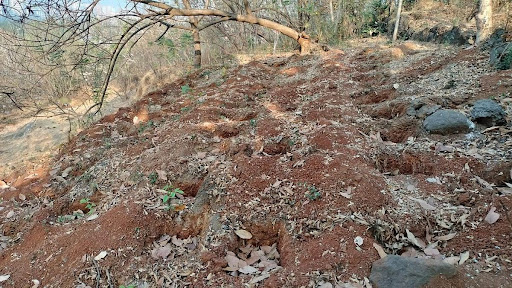
A report that says “10,000 trees planted” tells us very little.
It does not answer:
In many projects, survival is not measured at all. And where it is, survival can drop below 50 percent within the first year due to poor maintenance and lack of monitoring.
This creates a system where:
As sustainability reporting frameworks such as Global Reporting Initiative and Taskforce on Nature-related Financial Disclosures evolve, there is increasing emphasis on traceability, measurement, and outcome-based reporting.
Counting trees is an input metric. Impact requires outcome metrics.
This transition is not accidental. It is driven by three structural shifts.
Environmental, Social, and Governance reporting has moved from narrative to data.
Organizations are now expected to provide:
Generic plantation numbers do not meet these expectations anymore.

There is growing scrutiny around sustainability claims that are not backed by evidence.
Plantation has become one of the easiest metrics to report and one of the hardest to verify.
Without survival and tracking data, even genuine efforts risk being perceived as incomplete or misleading.
Companies are making net zero and climate commitments.
Trees are often included as part of these strategies. But climate impact depends on:
A tree that does not survive does not contribute to climate goals.
Without tracking, the link between plantation and climate impact remains weak.
To understand this shift, it helps to look at how metrics are evolving.
This is not just a reporting upgrade. It is a shift in how impact is defined.
Measurable impact in plantation projects is built on three foundations.
Every tree should be identifiable and locatable.
Not at site level, but at tree level.

Impact must be observed over time.
Survival, health, and growth need to be tracked consistently, not assumed.
Data should not just exist. It should enable decisions.
This is where tree tagging becomes critical.
Tree tagging assigns a unique identity and location to each tree, enabling:
Without a system like tree tagging, this shift is difficult to implement at scale.
It is not just about labeling trees. It is about building a system of record for environmental impact.
Instead of relying on estimates, organizations can move toward:
For companies, this shift directly impacts how CSR is designed and evaluated.
Projects move from activity driven to outcome driven.
Data becomes structured, traceable, and aligned with evolving frameworks.
Clear records reduce the risk of unverified claims.
Impact can be demonstrated, not just described.
For NGOs, measurable impact is closely tied to credibility and funding.
Transparent data builds long term trust.
Credible reporting strengthens funding conversations.
Organizations that can show real impact stand out.

One of the most important outcomes of measurable impact is better decision making.
When plantations are tracked:
This turns plantation into a managed process, not a one time activity.
Sustainability is becoming:
Plantation projects are part of this shift.
The expectation is clear:
Tree plantation will continue to be important. But the benchmark is changing. The question is no longer how many trees you planted. The question is how many you can stand behind.
1. What is a measurable impact in CSR projects?
Measurable impact refers to tracking real outcomes such as survival, growth, and environmental benefits rather than just activities like plantation counts.
2. Why are tree plantation numbers not enough for CSR reporting?
Plantation numbers do not show survival, growth, or actual environmental impact, making them insufficient for credible reporting.
3. How does tree tagging support ESG reporting?
Tree tagging provides traceable, location based data that improves transparency and aligns with ESG reporting requirements.
4. What is the difference between activity and impact in sustainability?
Activity refers to actions taken, while impact refers to measurable outcomes such as survival and environmental benefits.
5. How can companies measure plantation impact?
By tracking survival rates, growth data, location information, and environmental indicators over time.
6. Why is traceability important in sustainability projects?
Traceability ensures actions can be verified, improving credibility and accountability.
7. What role do trees play in climate commitments?
Trees contribute to carbon absorption and ecosystem restoration, but only if they survive and grow.
8. How can NGOs improve impact reporting?
By using structured monitoring systems that provide real and verifiable data.
9. What are outcome based sustainability metrics?
Metrics that measure actual results such as survival rates, biodiversity improvement, and climate impact.
10. How is CSR evolving in sustainability?
CSR is shifting from activity based reporting to outcome driven, measurable, and verifiable impact.