
LOADING
By Bhumeshwari Dangar • Apr 10, 2026
Contents
Tree plantation has become one of the most common ways to contribute to sustainability. Companies include it in CSR programs. NGOs organize large drives. Individuals participate with intent.
Numbers are shared. Targets are met. Reports are created.
But a critical question often remains unanswered:
What happens after the trees are planted?
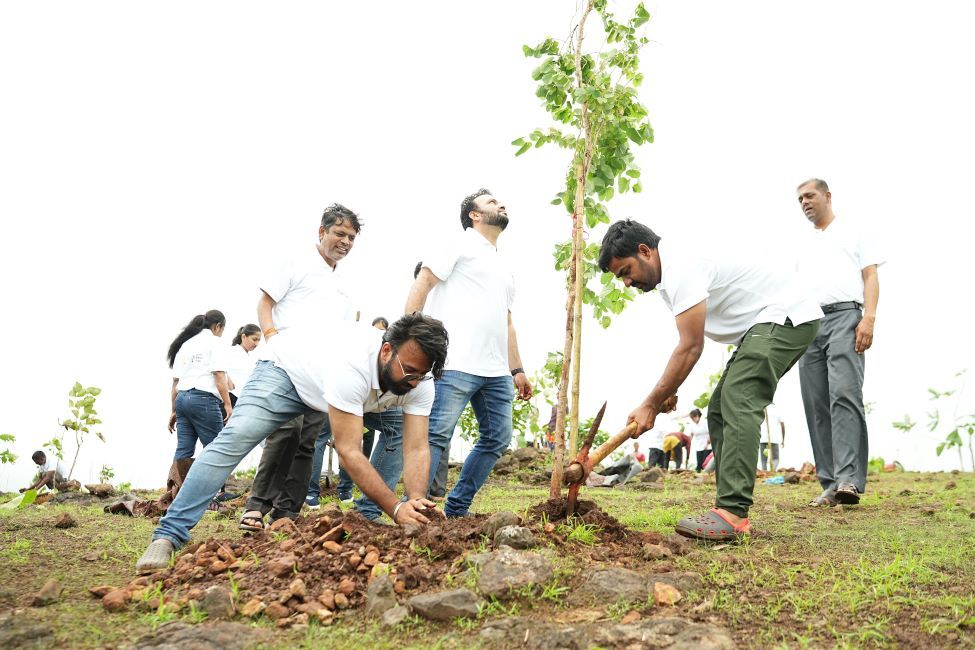
Because planting is visible. Impact is not. And this gap between action and outcome is where most plantation efforts lose their value.
Today, most plantation efforts are reported through numbers:
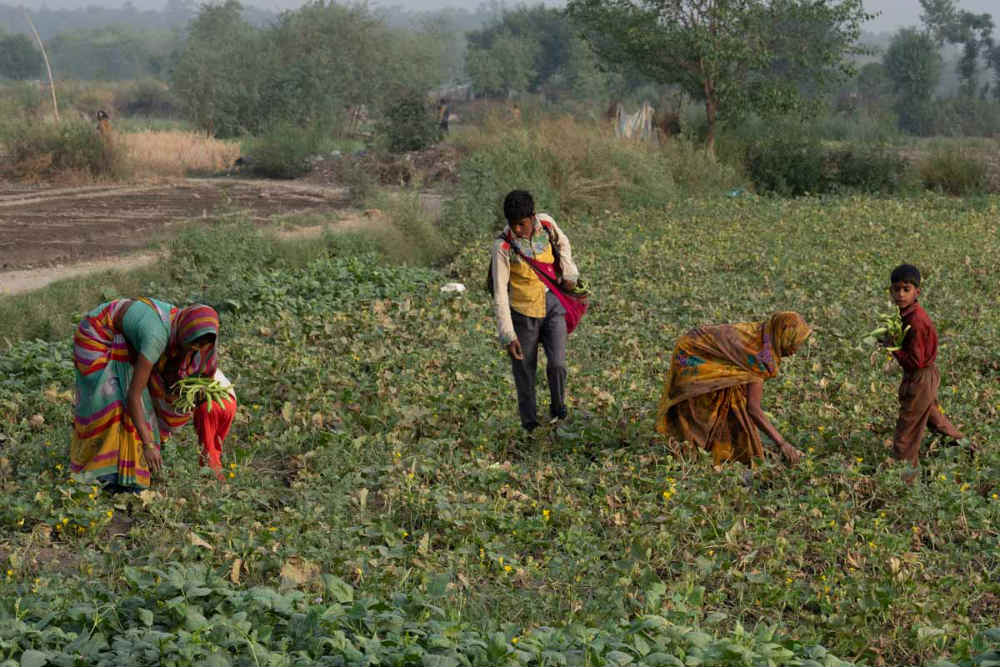
But rarely through:
This creates a system where:
As sustainability expectations evolve, this is no longer enough. Frameworks like Taskforce on Nature-related Financial Disclosures and Global Reporting Initiative are pushing organizations to move toward measurable, verifiable environmental data.
In this context, plantation without proof becomes a limitation.
There is a fundamental difference between planting trees and creating impact. Planting is an activity that happens on a specific day.
Impact is a process that unfolds over years. For a tree to create real value, it must:
Without visibility into this journey, there is no way to confirm whether impact has actually been created.
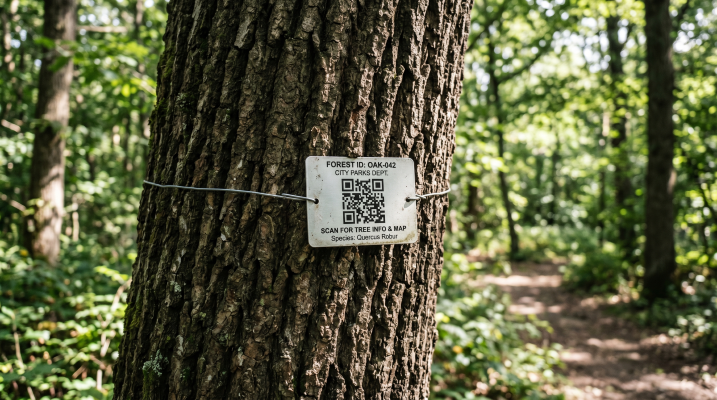
Tree tagging is a simple but powerful concept.
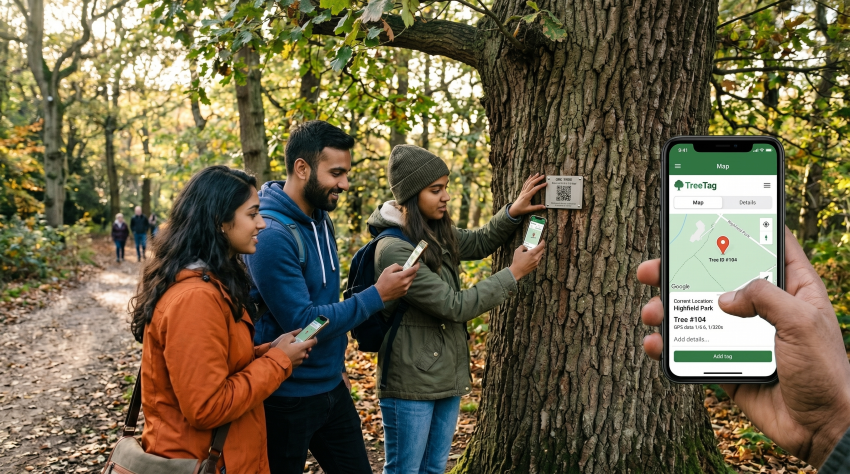
It means assigning a unique identity to every tree, along with:
Each tree becomes a traceable unit instead of an anonymous number. This allows plantation projects to move from:
Traditionally, plantation projects answer one question: How many trees were planted?
Tree tagging changes the question to: What happened to those trees?
This shift introduces a new layer of clarity:
1. Visibility Improves
Every tree is mapped and accessible. You know where it is, and you can revisit it anytime.
This removes uncertainty from plantation projects.
2. Survival Becomes Measurable
Instead of assuming survival rates, you can:
3. Reporting Becomes Credible
With tagged trees, reporting is no longer based on estimates. You can show:
4. Climate Impact Becomes Traceable
Trees are often linked to climate goals. But without tracking, this connection is weak.
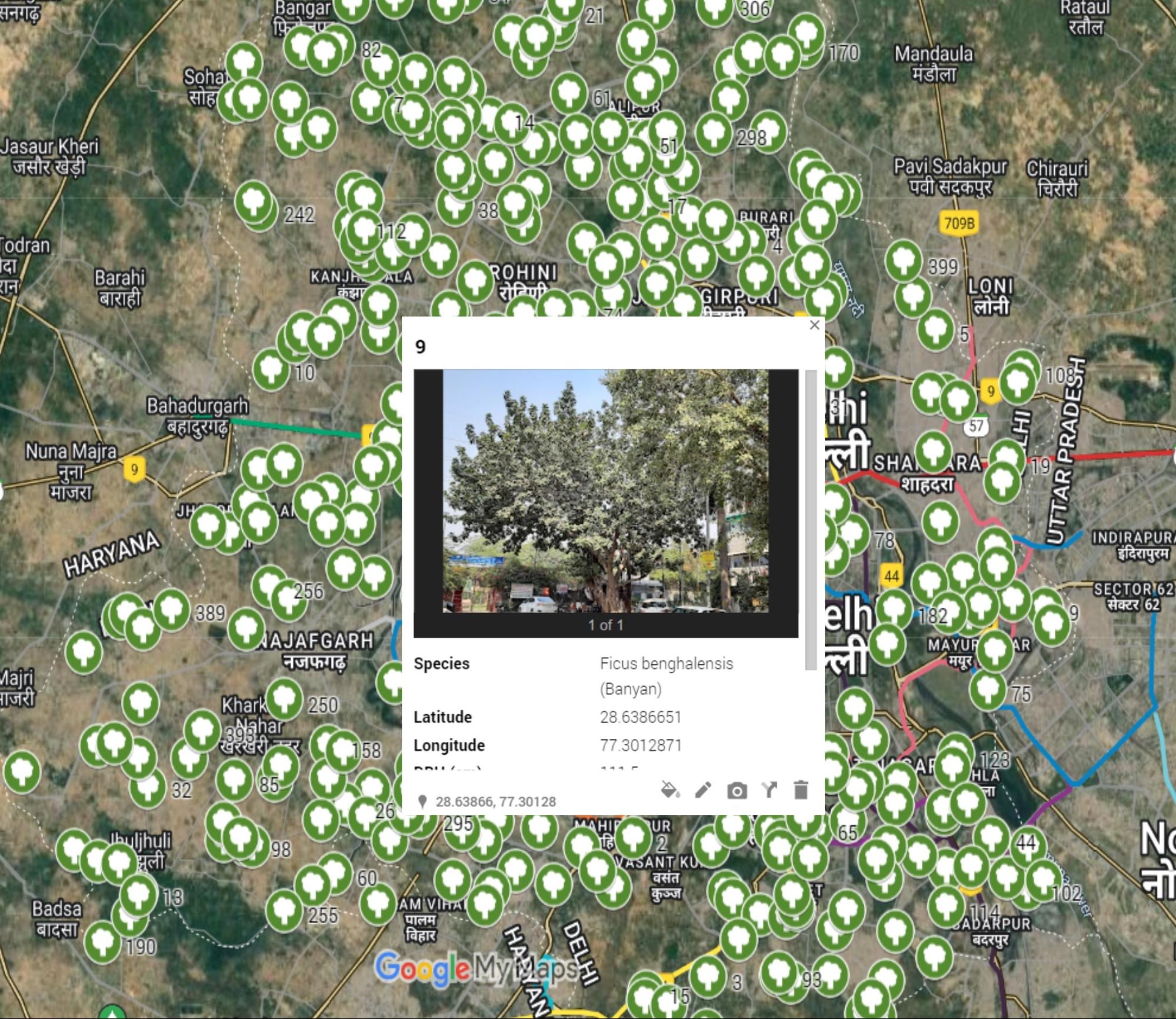
With tagging, you can start building:
5. Engagement Becomes Real
Tagged trees are not just data points. They can be:
The expectations around sustainability are changing.
For businesses:
For NGOs:
For individuals:
Tree tagging is not an add-on. It is a shift in how plantation projects are designed. Instead of:
This creates a structured approach where:
Sustainability is moving from:
Tree tagging fits directly into this shift by creating:
Closing Thought Planting trees will always be important. But in a world that demands accountability, planting alone is not enough.
To create real environmental and climate impact, we need to know what happens after the planting is done.
Because ultimately: impact is not what you start, it is what you can prove.
1. What is tree tagging?
Tree tagging is the process of assigning a unique identity and location to each tree, allowing tracking of survival, growth, and environmental impact.
2. How does tree tagging work?
Each tree is tagged with a unique ID, linked to location data and monitored over time through digital systems.
3. Why is tree tagging important?
It helps track survival, improve transparency, and provide verifiable data for reporting and sustainability initiatives.
4. How does tree tagging help in CSR reporting?
It provides traceable, location based data that strengthens credibility and supports measurable impact reporting.
5. Can tree tagging support climate goals?
Yes, by tracking survival and growth, it helps estimate carbon impact and aligns plantations with climate outcomes.
6. What is the difference between tree planting and tree tracking?
Planting is a one time activity, while tracking ensures long term survival, growth, and measurable impact.
7. Who can use tree tagging platforms?
Businesses, NGOs, governments, and individuals can use tree tagging to manage and monitor plantation projects.
8. How does tree tagging improve transparency?
It creates verifiable records for each tree, reducing reliance on estimates and improving accountability.
9. What data is collected in tree tagging?
Typically location, species, planting date, survival status, and growth indicators are recorded.
10. Is tree tagging scalable for large projects?
Yes, digital platforms allow thousands of trees to be tracked efficiently across locations.